Size a hood from the cooking line under it: the hood runs the length of the line plus an overhang at each open end, and its exhaust airflow is a figure per linear foot set by the heaviest-duty appliance underneath. A wall canopy over a medium-duty line (ranges, griddles, fryers) is typically quoted at about 300 CFM per foot.
Key takeaways
- Length = the cooking line plus an overhang at each open end; 6 inches at the ends and the front is the usual starting point.
- Airflow is set by the heaviest-duty appliance under the hood: light (ovens, steamers), medium (ranges, griddles, fryers), heavy (charbroilers, woks) or extra-heavy (wood or charcoal).
- Typical Type I wall-canopy figures: 200, 300, 400 and 550 CFM per linear foot for light, medium, heavy and extra-heavy duty.
- Plan make-up air with the exhaust: most of the air the hood removes has to come back in.
- The final design, the fire suppression system and the permit belong to a qualified designer and your local building and fire officials.
Start from the cooking line
List every appliance that will sit under the hood, left to right, with its width. The hood is built around that line, so decide the line first: swapping a griddle for a charbroiler later can change both the airflow and the fire suppression nozzles.
Add an overhang at each open end and along the front. The usual starting point is 6 inches past the cooking surface on every open side; a hood that is too short lets smoke and grease vapour roll out past its ends.
- Hood length = total width of the appliances + the end overhangs.
- Hood depth = appliance depth + the front overhang (minus any wall space behind).
- A backshelf (low proximity) hood sits close over the line and has no front overhang; it is a different design, not a short canopy.
Further reading
Find the cooking duty
Exhaust airflow is chosen by the heaviest-duty appliance under the hood, not by the average. One charbroiler in a line of fryers makes the whole hood heavy duty.
- Light duty: ovens, steamers, kettles, combi ovens, pasta cookers, holding and warming equipment.
- Medium duty: ranges, griddles, fryers, tilting skillets, salamanders, hot plates and induction.
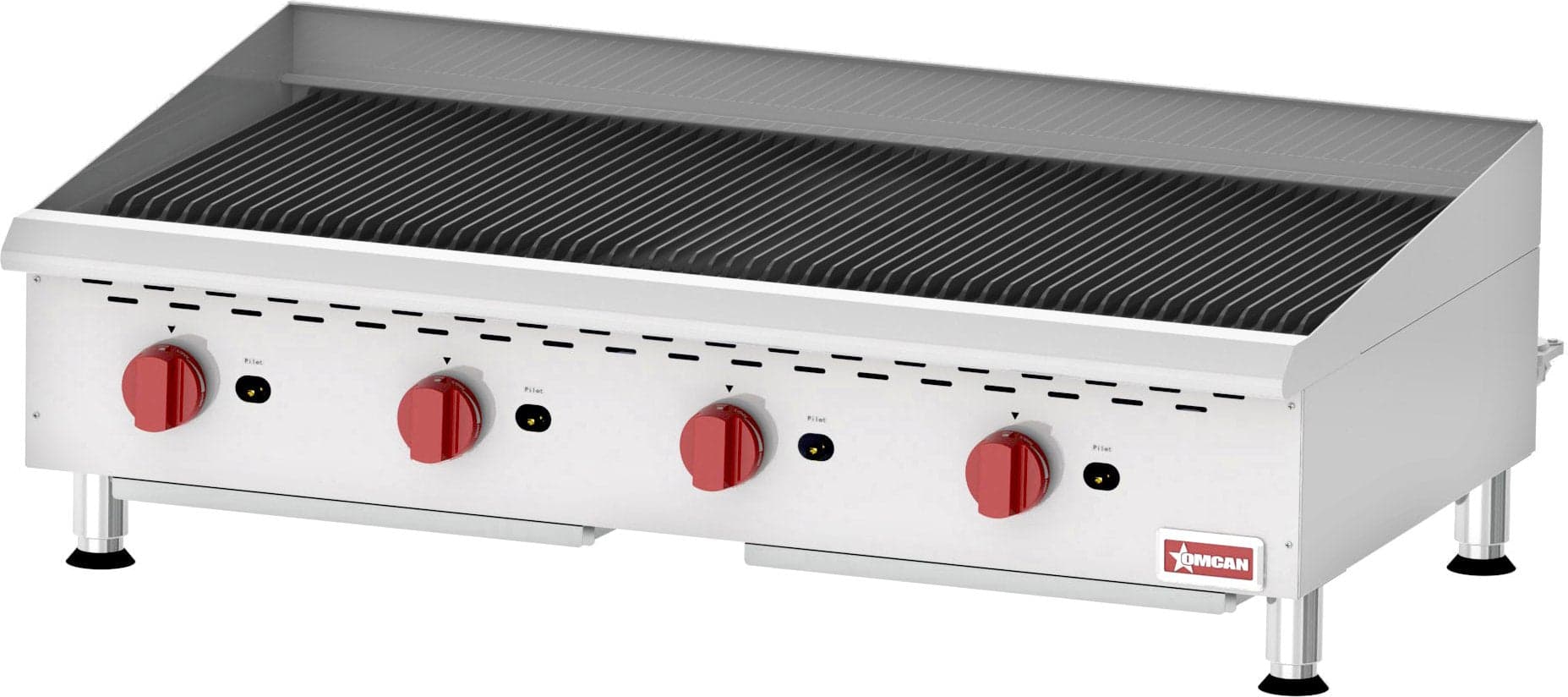
- Heavy duty: charbroilers and upright broilers, woks, tandoors and smokers.
- Extra-heavy duty: solid fuel, such as wood-fired ovens and charcoal or mesquite grills.
Work out the exhaust airflow
Multiply the hood length in feet by a rate in CFM (cubic feet per minute) per linear foot for the hood style and duty. These are the figures the Norpex hood builder quotes with; they follow the shape of the per-foot tables in the mechanical codes, and the engineer's design and the hood maker's listing decide the final number.
Example: a 10-foot wall canopy over ranges and fryers (medium duty) works out to about 3,000 CFM of exhaust.
- Wall canopy: 200 (light), 300 (medium), 400 (heavy), 550 (extra-heavy) CFM per foot.
- Single island canopy: 400, 500, 600 and 700 CFM per foot; an island hood is open on all sides, so it needs more air.
- Double island canopy: 250, 300, 400 and 550 CFM per foot.
- Backshelf hood: 250, 300 and 400 CFM per foot for light to heavy duty; it is not meant for solid fuel.
- Type II hood (heat and steam only, such as over some dishwashers and ovens): about 150 CFM per foot on a wall, 225 on an island.
Plan make-up air with the exhaust
Every cubic foot a hood pulls out has to be replaced. Without make-up air the kitchen goes into negative pressure: doors are hard to open, the hood stops capturing well and gas appliances can draw badly. The Norpex hood builder quotes make-up air at about 80% of the exhaust, leaving the kitchen slightly negative so cooking smells do not drift into the dining room.
In a Canadian winter, make-up air usually needs to be tempered (heated) before it enters the kitchen, which is a cost to plan for along with the fan itself.
Where the make-up air enters matters too. Air blown straight down at the front of the hood, or from a diffuser aimed across it, can push smoke out of the capture area; the designer places the supply so it reaches the cooks without disturbing the hood. Ask whether the hood maker offers a front or perimeter supply plenum built for its own canopy.
Height, clearance and the approvals
Canopy hoods are commonly hung with the bottom edge at about 78 inches above the floor, which leaves working clearance above most cooking surfaces. Your designer checks the clearance against the hood maker's listing and the appliance manuals.
In Canada, a Type I grease hood is normally a listed assembly (CAN/ULC-S650 is the standard for commercial kitchen exhaust hood assemblies), installed with a fire suppression system and grease duct to NFPA 96 as adopted by your provincial building and fire codes. The local building department and fire authority approve the system, so involve them before the cooking line is ordered.
Common questions
How many CFM does a commercial hood need?
- Multiply the hood length in feet by a rate per foot for the hood style and the heaviest-duty appliance under it. A wall canopy over medium-duty equipment such as ranges, griddles and fryers is typically quoted at about 300 CFM per foot, so a 10-foot hood needs about 3,000 CFM. The engineer's design and the hood's listing set the final figure.
How far should a hood overhang the cooking equipment?
- A common starting point is 6 inches past the cooking surface on every open side: both ends and the front of a wall canopy. Backshelf hoods are a different design and sit close over the line without a front overhang.
Does an electric fryer still need a hood?
- Usually, yes. Hood requirements turn on what the appliance gives off, not its fuel: an electric fryer still produces grease vapour. Your local building department and fire authority decide.
What is the difference between a Type I and a Type II hood?
- A Type I hood handles grease-laden vapour from cooking and carries grease filters, a grease duct and fire suppression. A Type II hood handles heat and steam only, such as over some dishwashers and ovens, and moves less air.