
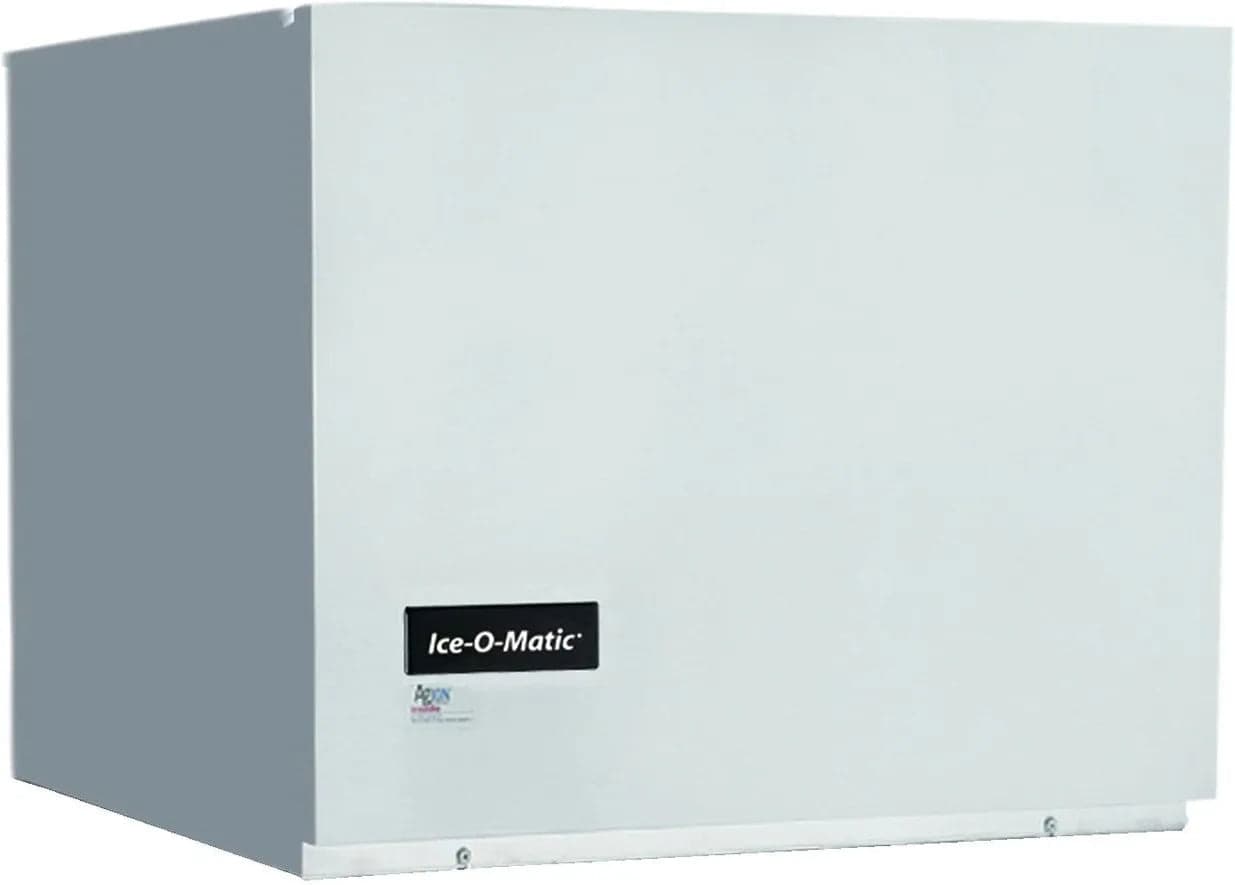
Most Canadian health units treat ice as food, so the machine that makes it needs regular cleaning. That is two separate jobs: descaling removes mineral scale and sanitizing kills slime and biofilm. Follow the manufacturer's schedule, which is more often with hard water or heavy use.
Key takeaways
- Descaling and sanitizing are separate steps with separate products.
- Use only the cleaner and sanitizer the manufacturer approves for that machine.
- Many manufacturers recommend cleaning at least twice a year, and more often with hard water, heavy use or yeast in the air.
- Check the air filter, the condenser coil and the water filter while the machine is open.
- Discard the ice the manual says to after cleaning, and call an authorized technician when cleaning does not fix the problem.
Why ice machine cleaning matters
Most Canadian health units treat ice as food. Scale and slime build up inside the machine where you cannot see them, and they affect the taste and clarity of the ice, slow production and shorten the machine's working life.
Two different problems build up. Mineral scale forms where water freezes, from the minerals in your water supply. Slime and biofilm grow from bacteria, yeast and mould that thrive in a wet, cold machine. Each needs its own product and its own step.
Descaling and sanitizing are separate steps
Descaling dissolves the mineral deposits that restrict water flow and cloud the ice. Sanitizing kills the organisms that cause slime, smells and off tastes. A machine that only ever gets one of the two still builds up the other.
Many commercial ice machines have a built-in clean cycle: you add the manufacturer's approved cleaner and the machine circulates it through the water system and the freezing surface. Sanitizing is then a separate step with the approved sanitizer, followed by rinsing, before the machine goes back to making ice.
- Never substitute an unapproved cleaner.
- Some machines need a nickel-safe cleaner because of the metal on the evaporator.
- The manual names the products and the steps for your model.
How often to clean
Follow the manufacturer's schedule. Many recommend at least twice a year in ordinary conditions. Hard water, heavy use, warm or humid rooms and yeast in the air, as in bakeries and breweries, all call for more frequent cleaning.
Keep a simple log of each cleaning. It shows when the next one is due, and it helps a technician if a problem comes back.
The steps in general terms
Turn the machine off and empty the bin, discarding all the ice in it. Remove the panels and parts the manual says you may remove, and wash them as it directs.
Run the clean cycle with the approved cleaner, following the manual's quantities. Rinse as the manual specifies, then run the sanitizing step with the approved sanitizer and rinse again.
Reassemble the machine and restart it, then discard the first batches of ice as the manual instructs. Clean and sanitize the bin and the scoop as well, because ice touches both.
What else to check while it is open
On an air-cooled machine, clean or replace the air filter. A clogged filter makes the condenser work harder and slows production.
Check the condenser coil for dust and grease, and clean it as the manual directs. Replace the water filter cartridge on the schedule its maker gives; a spent cartridge restricts flow and stops protecting the machine from scale.
Water, drains and placement
A water filtration system on the inlet line reduces sediment and slows scale, which keeps the machine cleaner between cleanings. Change the cartridge on its maker's schedule, because a spent cartridge stops doing either job.
Where the machine sits affects how hard it works. Air-cooled machines need the clearance the manual specifies around their vents, and a hot room or a spot next to a fryer or oven reduces how much ice the machine makes. Plumbing codes commonly require ice machine and bin drains to discharge through an air gap, so dirty water cannot back up into the ice.
Signs it needs cleaning now
Cloudy or soft ice, slower production, an off taste or smell in the ice, and visible slime in the bin or on components are all reasons to clean before the next scheduled date.
If any of these return soon after a full clean, the cause may not be dirt.
Common questions
Can I use any cleaner or sanitizer in my ice machine?
- No. Use only the products the manufacturer specifies for that model. The wrong product can damage the evaporator, seals and other components, and some machines need a nickel-safe cleaner.
How long does cleaning take?
- It depends on the model and on how much of the machine you take apart, and the manual gives the cycle times. Plan for the machine to be out of production for part of a shift, with enough ice set aside to cover it.
Is the ice safe to use right after cleaning?
- Not the first batches. The manual says how much ice to discard after a clean and sanitize, to clear any residue from the system. Follow it before serving ice again.
What causes scale in an ice machine?
- Minerals such as calcium and magnesium in the water supply deposit on the cold surfaces where water freezes. Machines on hard water scale faster, and a water filtration system on the inlet can reduce how quickly it builds.
Should a busy kitchen clean more often?
- Usually, yes. More water and more ice through the machine means faster scale and biofilm build-up. Ask the manufacturer what interval suits your volume and water, and keep a log so you can see when problems start.