Holiday catering runs on planning: size equipment from your bookings, keep hot food at 60 °C or above and cold food at 4 °C or below from kitchen to table, and order early, because busy season and winter freight can stretch dispatch timing.
Key takeaways
- Plan equipment from your bookings: number and size of events, on-site or drop-off, hot and cold menus.
- Health Canada's guidance: hot food at 60 °C or above, cold food at 4 °C or below.
- Add production and holding capacity for your busiest day, not your average one.
- Bring a probe thermometer to every event and check your local health unit's catering rules.
- For a larger kit, send the whole list through the project quote form.
Plan from your bookings
Before ordering, write down the season: how many events, typical party sizes, and how many are full service versus drop-off. Outline the menus so you know whether the pinch point will be cold storage for salads and desserts or hot holding for mains and sides.
Order as early as you can. Busy season and winter freight can stretch dispatch timing, which depends on the supplier and the destination. For a larger order, send the equipment list or a floor plan through the project quote form: a person prices the whole list with freight included and replies within one business day.
Hot holding and transport
Health Canada's guidance is to keep hot food at 60 °C or above. On site, holding cabinets, food warmers and heat lamps keep food at temperature through service. For drop-off events, insulated transport carriers keep cooked food hot on the road.
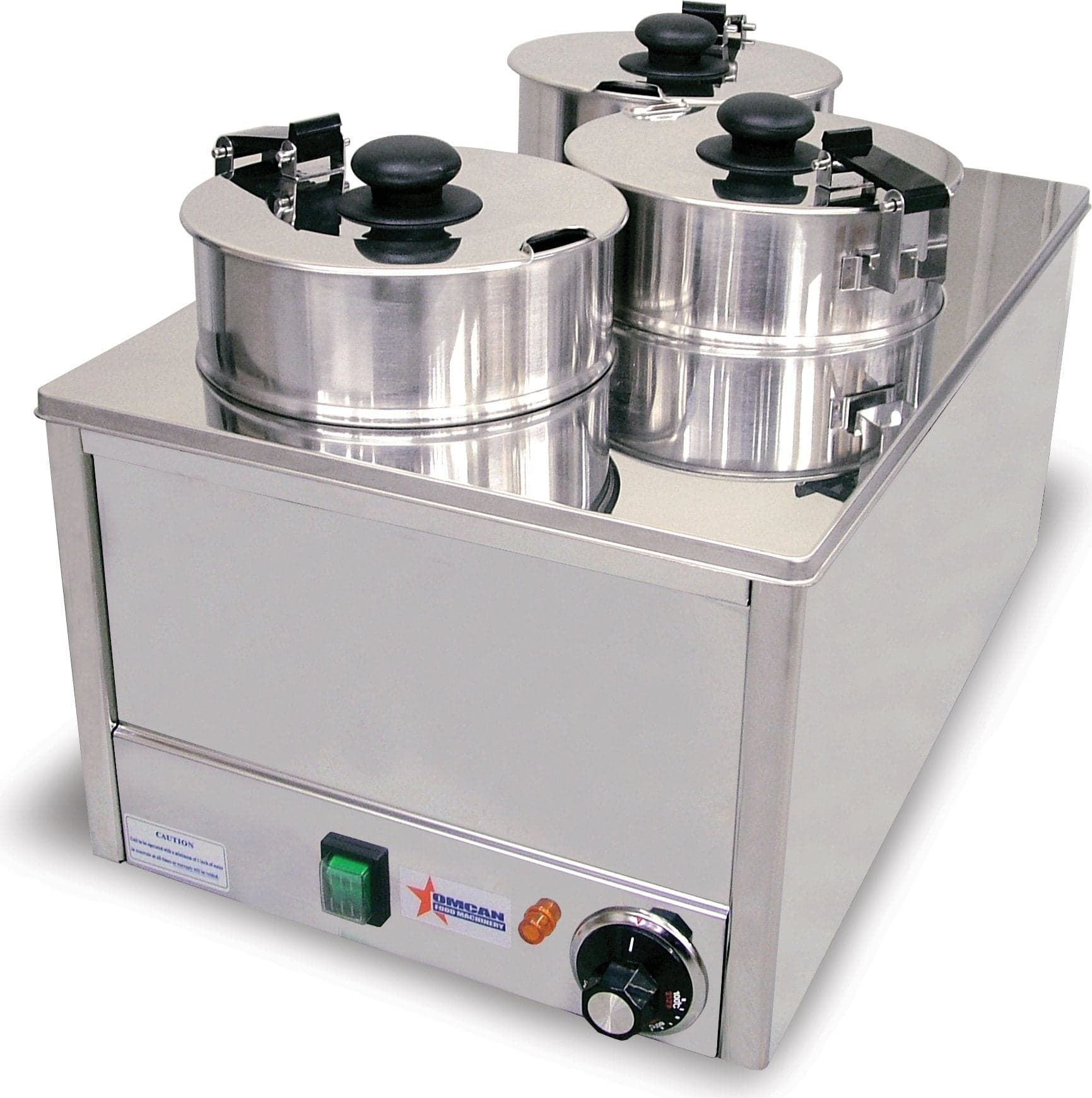
Chafing dishes, with fuel or electric heat, hold food on the serving line, and smaller warmers handle sauces and gravy. If two events run on the same day, a second holding cabinet or set of chafers lets one batch hold while the next is prepared.
Cold holding and transport
Cold food should stay at 4 °C or below through prep, holding and service. Plan enough refrigerated space in your own kitchen for prep days, and do not count on a venue's coolers having room.
For drop-off events, insulated carriers with ice packs keep cold food cold in transit. On the line, cold wells and ice-filled displays hold salads and desserts at temperature.
Production and prep
Plan oven and range capacity for the busiest day of the season. Sheet pans and hotel pans in the sizes your recipes and your holding equipment use keep prep moving.
Food storage containers with fitted lids and labels are essential: label every container with the contents and the date. A separate work table for plating and garnish keeps event assembly out of the way of regular production.
Serving and allergens
Match chafers, serving utensils and servingware to the menu and the service style. Beverage dispensers for water, coffee, tea or punch save space and handling on the serving table.
Label allergens clearly at the serving table and keep ingredient lists on hand to answer questions. Check what your local health unit requires you to disclose.
Power and fuel at the venue
Electric warmers and holding cabinets need outlets and circuits that can carry them. Ask each venue where the outlets are and how many warmers can run on each circuit before the day, because several warmers on one circuit can trip a breaker in the middle of service. Use cords rated for the load and run them where nobody will trip.
Fuel-heated chafers work where power is scarce, but many venues restrict open flames, so check the venue's rules first. Bring enough fuel for the length of service, keep spare fuel away from the serving line, and have a way to extinguish and dispose of it safely afterwards.
Food safety on the move
A probe thermometer is essential. Check food temperatures when you pack, when you arrive and before you serve, and keep a time and temperature log for each event.
Keep raw ingredients and ready-to-eat food apart from packing to service, with separate utensils and boards. Catering rules vary by province and municipality, including food handler certification, so check with your local public health unit.
After service and next season
Clean equipment thoroughly after every event: take chafers, carriers and warmers apart and wash them so they are ready for the next booking. Note anything damaged or worn.
Store holding and transport equipment clean and dry between bookings, with lids, gaskets and small parts kept together so nothing goes missing before the next event. At the end of the season, list what to replace, add or upgrade for next year, and send the list through the project quote form if a bigger kit makes sense.
Common questions
Can I use residential kitchen equipment for catering?
- Residential appliances are not built for commercial volume, and many health units expect commercial equipment certified to food equipment standards in a food business. Check with your local health unit before relying on home appliances.
What temperature should hot food be held at?
- Health Canada's guidance is 60 °C or above. Check the inside of the food with a probe thermometer at packing, on arrival and before service, and follow your local health unit's rules for food that has dropped below temperature.
How do I know food is safe to serve after transport?
- Probe it on arrival. Cold food should be at 4 °C or below and hot food at 60 °C or above. If food is outside those temperatures, follow your local health unit's rules rather than guessing, and keep a log for every event.
Do I need to buy everything at once?
- No. Start with the holding and transport equipment your busiest events need, then add serving and production capacity where you see bottlenecks. A project quote can cover the full kit even if you buy it in stages.
What if a venue has limited fridge space?
- Bring your own cold holding: insulated carriers with ice packs or portable refrigeration. Pack cold items as close to departure as possible and keep them in your own cold storage until then.