
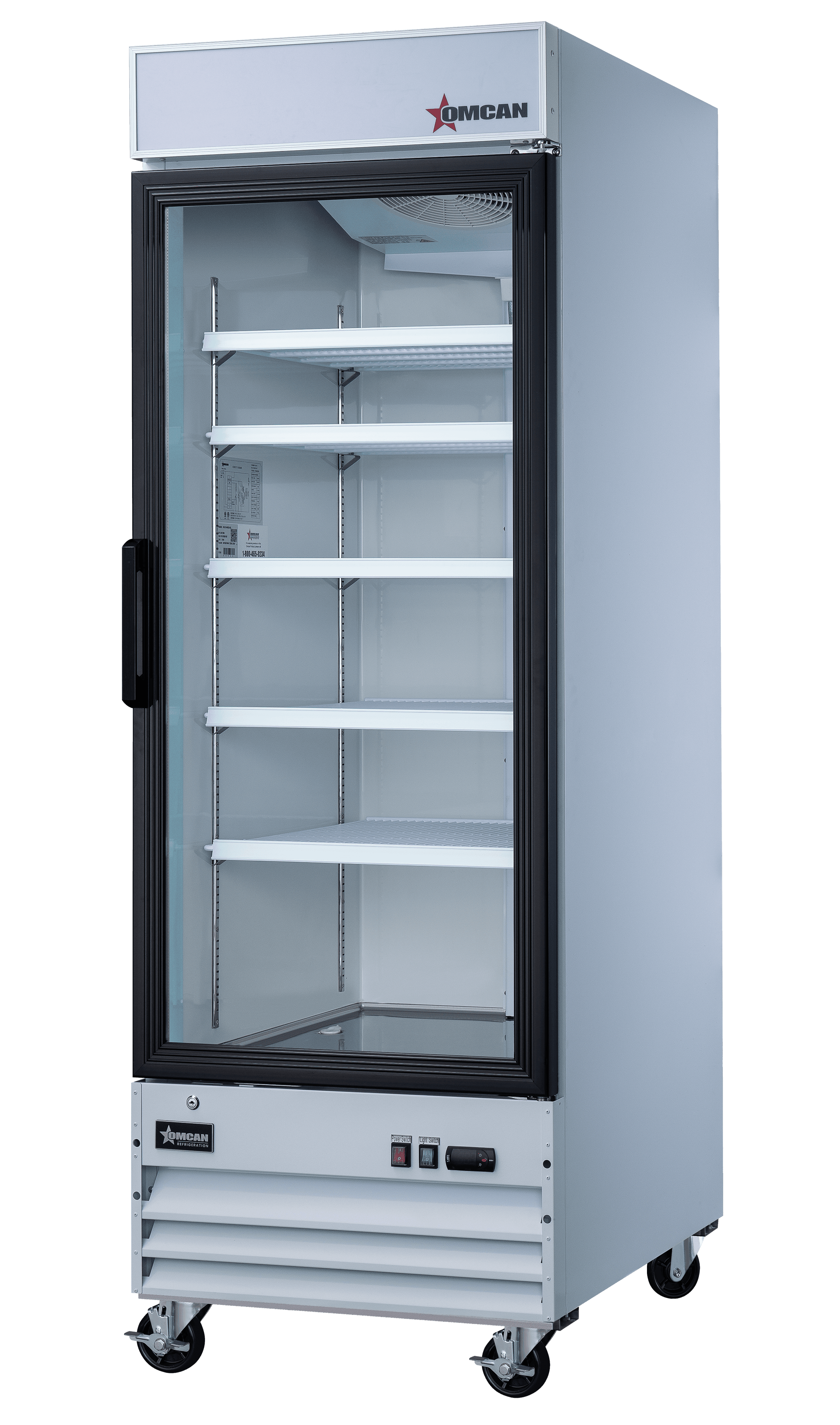
Health Canada's guidance is to keep refrigerated food at 4 °C or below and frozen food at -18 °C or below, and provincial rules and local health units set the requirements you are inspected against. Measure the food with a calibrated probe thermometer, because a display can differ from what is on the shelf.
Key takeaways
- Health Canada's guidance: cold food at 4 °C or below, frozen food at -18 °C or below; check your local health unit for the rules you are inspected against.
- Measure product temperature with a calibrated probe thermometer, not just the display.
- Overloading, blocked air flow, worn gaskets, dirty condenser coils and hot surroundings are the common causes of a warm unit.
- Cleaning coils, checking gaskets and keeping the clearance the manual asks for prevent most problems.
- If a unit cannot hold temperature, move the product and call a technician from the manufacturer's service network.
The temperatures to hold
Health Canada's food safety guidance is to keep refrigerated food at 4 °C or below and frozen food at -18 °C or below. Between 4 °C and 60 °C is the temperature danger zone, where bacteria can grow quickly.
Provincial food premises rules and your local public health unit set the requirements you are inspected against, including how often temperatures must be checked and recorded. Check with yours, ideally before the equipment is bought.
Set point versus actual temperature
Temperature is not uniform inside a cabinet. A unit set to its target can read warmer at the door, on some shelves or near the front, which is why the food matters more than the display.
Use a calibrated probe thermometer in the product itself, not in the air space. Many operators set the unit a degree or two below the limit to leave a margin for door openings and busy periods.
Logging and monitoring
Many food safety plans call for temperature logs at set times each day. A log shows compliance and catches a slow drift before it becomes a problem.
Digital monitoring with alarms can warn staff when a unit drifts out of range, which helps where manual checks are hard to keep up during service. Some systems record automatically, which is useful at inspection time.
Why units run warm
A packed cabinet cannot circulate cold air. When product blocks the air flow inside, temperatures rise and become uneven.
Frequent door openings let warm air in. Worn door gaskets, or a door that does not close fully, let cold air out. Dirty condenser coils reduce the system's ability to reject heat.
Hot kitchen air around the compressor makes it work harder. Putting hot food in to cool loads the unit heavily, which is why hot food should be cooled by an approved method, such as a blast chiller, before it goes into storage.
How different equipment behaves
Reach-ins can vary from top to bottom and front to back, depending on where the evaporator sits and how air moves. Display cases also face store lighting, warm surroundings and frequent opening.
Undercounters and prep tables hold a small volume of air, so they warm quickly when a door or lid is open, and a prep table rail left uncovered between services works the unit hard. Chest freezers can be warmer near the top, so probe at the depth where product sits.
Loading and organizing a cabinet
Cold air has to reach every product. Leave space between products and between product and the walls, keep the evaporator fan and the air vents inside the cabinet clear, and do not line shelves with foil or cardboard that blocks the air flow.
Store raw meat, poultry and fish below ready-to-eat food, so nothing can drip onto food that will not be cooked. Cover and label containers with the contents and the date, and rotate stock so the oldest product is used first. A cabinet organized this way also opens for less time, because staff find things faster.
Maintenance that keeps units cold
Clean the condenser coils on the schedule in the manufacturer's manual. Dust and grease on the coils are among the most common causes of a unit that struggles.
Check door gaskets and door alignment regularly and replace a gasket that is hard, cracked or loose. Keep the clearance around the unit that the manual asks for, so the condenser can breathe.
When to call a refrigeration technician
If a unit cannot hold temperature despite good maintenance and sensible loading, move the product to a working unit and contact a refrigeration technician from the manufacturer's authorized service network. Refrigerant and compressor work is not a do-it-yourself job.
Keep the manufacturer's service contact where staff can find it, so a failing unit is reported the moment it is noticed.
Common questions
How do I know if my refrigerator is cold enough?
- Measure the food, not the air: put a calibrated probe thermometer into a product and read it once the reading settles. Cold food should be at 4 °C or below under Health Canada's guidance.
Why is one shelf warmer than another?
- Air does not move evenly through a cabinet, and the warmest spot depends on where the evaporator and fan sit and how full the unit is. Probe several shelves, keep air paths clear and store the most sensitive items where your readings are coldest.
Can I fix a warm refrigerator myself?
- You can check the simple causes: nothing blocking the air vents inside, a door that closes fully, enough clearance outside and clean condenser coils. If the unit still runs warm, call a refrigeration technician rather than opening the refrigeration system.
What is the temperature danger zone?
- Health Canada describes 4 °C to 60 °C as the danger zone, where bacteria can grow quickly. Keep cold food at 4 °C or below and hot food at 60 °C or above.
How often do I need to log temperatures?
- That depends on your local health unit and your food safety plan. Many operations log at least daily, often before service, and some use continuous digital monitoring. Ask your health unit what it expects.